A damaged vehicle in Mesquite may need more than a standard tow. The operator needs the exact location, vehicle condition, and destination before accepting the recovery call. If an officer controls the scene, follow that officer’s directions first.
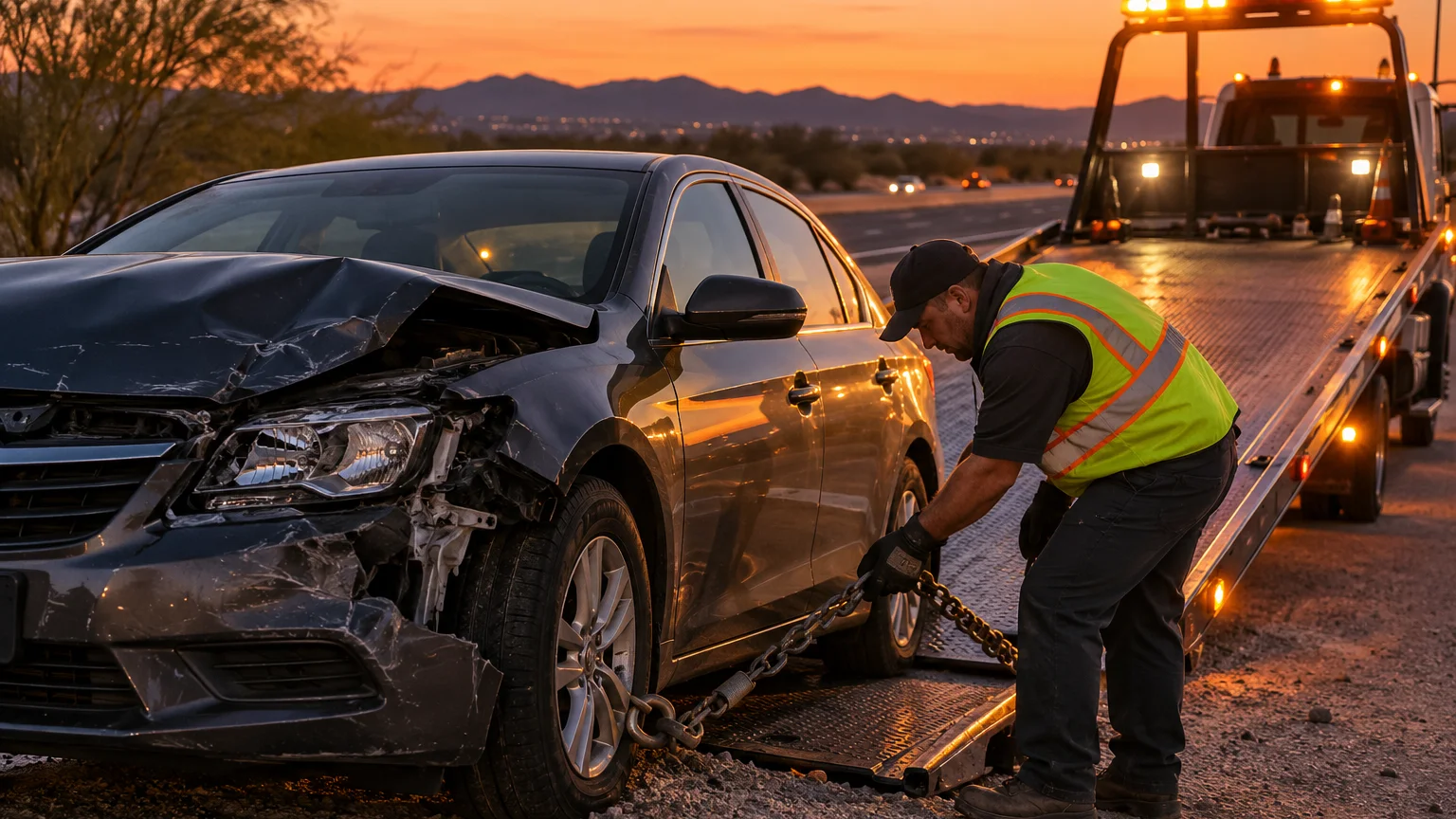
Start with safety and the instructions given at the scene
Your first task isn’t arranging the tow. It’s following the instructions given by the officer or emergency personnel at the scene. Don’t move toward traffic, approach the damaged vehicle, or change its position unless the person controlling the scene directs you.
A crash scene can change quickly. Traffic may still be passing beside the vehicle. Debris may cover lanes or the shoulder. The vehicle may also be unstable, leaking fluid, or sitting where another driver can’t see it clearly. Tell the dispatcher what you can observe from a safe place. Don’t inspect damage that requires stepping into the roadway.
If an officer has already requested an operator, say that immediately. Don’t create a second dispatch for the same vehicle. Confirm the towing company’s name with the officer, then wait for instructions about access and removal.
If you’re allowed to select the operator, Quick Tow Dallas can connect you with a licensed, insured towing operator. Our role is dispatch and referral. We don’t own recovery equipment or perform the tow. The operator decides whether the vehicle’s position and damage match its capabilities.
A simple disabled-car tow differs from accident recovery and winch-out work. Collision damage may prevent the wheels from turning or the vehicle from rolling normally. It may also require equipment that isn’t carried on every truck. Describing the scene clearly helps the operator decide whether to accept the call.
For a broader look at busy-road recovery, read our guide to accident recovery on Dallas freeways. Mesquite calls still need their own location details, especially around I-30, US 80, and I-635.
Share the exact road, direction, and vehicle position
“Mesquite” isn’t a precise dispatch location. Start with the road, travel direction, and nearest confirmed cross street or exit. Then explain whether the vehicle is on the main lanes, shoulder, frontage road, ramp, parking lot, or nearby side street.
A useful location report might identify eastbound I-30 near Town East Boulevard. Another might identify westbound US 80 near its connection with I-635. Don’t guess an exit number or road name. Use a map application, a visible sign, or the location given by the officer.
Direction matters because divided highways limit how an operator can approach. “On I-30” leaves several unanswered questions. “Eastbound I-30, on the right shoulder near Town East Boulevard” gives the dispatcher a clearer starting point. If you’ve already left the vehicle, provide its location rather than your current location.
Also tell the dispatcher whether you’re with the vehicle. Share a safe meeting point if the scene is restricted or you were moved elsewhere. Don’t promise that a parking lot or frontage-road entrance reaches the vehicle. The operator will confirm access before accepting the call.
Include recognizable vehicle details:
- Year, make, model, and color
- License plate, if available
- Vehicle type and approximate size
- Visible damage location
- Whether a trailer or load is attached
- Where the keys are located
These details reduce confusion when several vehicles are stopped nearby. They also help distinguish ordinary emergency towing from a recovery that needs different equipment.
When searching for accident recovery in Mesquite, the most useful information isn’t a broad city name. It’s an accurate position that the operator can review before dispatch.
I-30 and US 80 create different access details
I-30 and US 80 cross different parts of Mesquite, and their ramps don’t create identical access. I-30 runs through the Town East area and meets I-635 near Mesquite’s western side. US 80 runs farther south and also connects with I-635. A vehicle near either interchange needs more detail than the highway name alone.
On I-30, specify whether the crash is east or west of Town East Boulevard. Say whether the vehicle remained on the main lanes or reached a frontage road. A location near Town East Boulevard could mean the highway, a ramp, a commercial entrance, or a nearby street. Each creates a different approach.
On US 80, name the travel direction and the side where the vehicle stopped. Confirm whether it’s before or after the I-635 connection. Don’t describe a vehicle on US 80 as being on I-30 simply because both routes lead toward Dallas. That error can send an operator toward the wrong corridor.
I-635 adds another layer. A driver may remember passing the interchange but not know which route now holds the vehicle. Check the map marker against visible signs. If they conflict, tell the dispatcher both pieces of information instead of choosing one.
Access can also change after the collision. An officer may direct vehicles away from the original position. The damaged car may be moved from a travel lane to a shoulder or service road. Give the current location, then briefly explain where the collision occurred if it helps identify the scene.
Don’t tell an operator how to enter a controlled crash scene. Share what you see and follow the officer’s directions. The operator will determine whether it can reach the vehicle with the equipment available.
Explain whether the vehicle rolls, steers, or blocks traffic
Vehicle condition affects the entire recovery plan. A car that rolls and steers presents a different job from one with collapsed suspension, locked wheels, or major front-end damage. Don’t diagnose mechanical problems. Describe what happened when someone last tried to move it.
Tell the dispatcher whether:
- The vehicle rolls without dragging
- The steering responds
- One or more tires appear flat or displaced
- A wheel points in an unusual direction
- The vehicle rests against a curb, barrier, or another object
- Airbags deployed
- Glass or loose body panels surround the vehicle
- The car is upright and on the roadway
- The vehicle blocks a lane, ramp, driveway, or parking entrance
Only report what you can see safely. If you don’t know whether it rolls, say you don’t know. That’s more useful than an uncertain answer.
Also mention unusual vehicle features. All-wheel drive, low ground clearance, an electric drivetrain, a missing wheel, or a loaded pickup can affect equipment selection. The operator may ask follow-up questions or request photos taken from a safe position.
Don’t try to push, pull, winch, or steer a collision-damaged vehicle yourself. Recovery equipment should be handled by the operator performing the work. If the vehicle is partly off the pavement, explain its angle and surroundings without walking into the recovery area.
Crash towing in Mesquite may require more than transporting the car. The operator must first decide whether it can load or recover the vehicle without additional equipment. Quick Tow Dallas passes along the details you provide, but the operator makes that capability decision.
Clear answers also help prevent a standard tow truck from accepting a job it can’t safely complete. If the condition changes before arrival, update the operator directly.
Confirm who selected the operator and where the vehicle is going
Before agreeing to a tow, confirm who chose the operator. An officer may already have authorized a company to enter the scene. Your insurer or roadside program may have arranged another operator. You may also be making a consent request yourself.
If an officer controls the scene, ask which operator is authorized. Don’t assume a different company can enter because you called it first. The officer’s directions control what happens at that active scene.
For a consent call, the operator should confirm its capability, the destination, and its price before accepting the job. Quick Tow Dallas doesn’t set the operator’s price. Ask the operator what the quoted amount covers and whether the destination changes that amount before the truck rolls.
You can verify a towing operator through the TDLR license search. Texas licenses towing companies and operators through the Texas Department of Licensing and Regulation. TDLR recognizes Incident Management, Private Property, and Consent license categories. Its consumer towing information also explains the state complaint process.
Confirm the destination by name and address. The vehicle might be going to a repair shop, dealership, private property, or storage facility. Make sure the chosen location will receive the vehicle. Don’t assume a repair facility has approved delivery because it appears on a map.
Mesquite doesn’t operate a city impound lot. The city uses private wreckers. That makes the actual destination especially important after an officer-directed tow. Ask which private facility received the vehicle and how to contact it.
If the vehicle is taken without your direct selection, review your rights when a car is towed in Texas. Keep the operator’s name, destination, and paperwork together. Those details matter when arranging repairs, insurance inspection, or vehicle release.
When to call us
Call when a damaged vehicle in Mesquite needs a licensed towing operator and no operator has already been assigned at the scene. Call us at (469) 902-4411 and we’ll connect you with an operator who handles this work.