Moving a collector vehicle starts with matching the car to the right operator. Before requesting classic car towing in Plano, share the car’s condition, dimensions, access, and destination. Those details help the operator propose a loading plan and set the price before rolling.
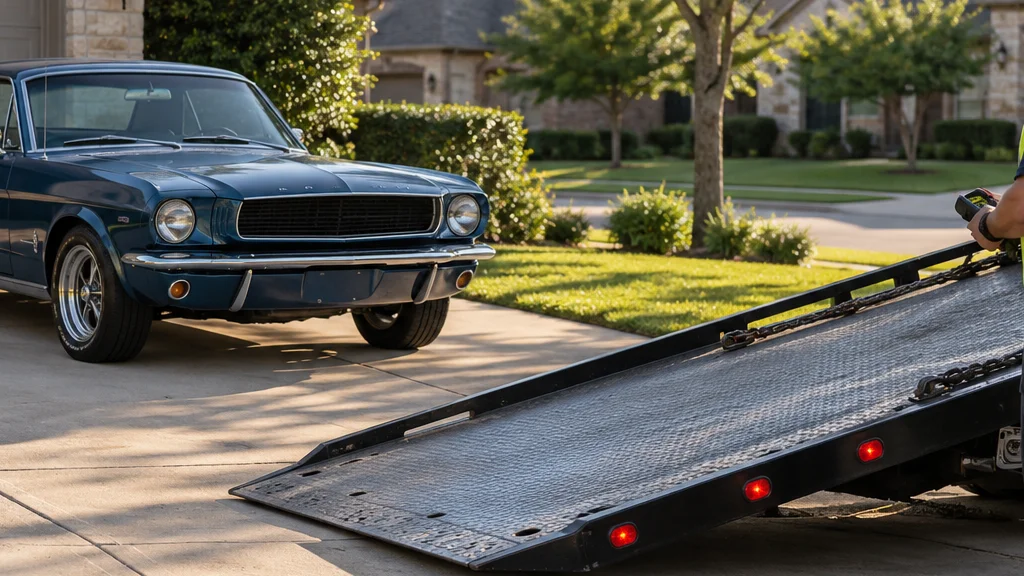
Quick Tow Dallas dispatches licensed, insured operators. We don’t own specialty trucks or perform the tow. The operator who accepts the job handles the vehicle and confirms the equipment needed.
Describe the car and its current condition
Start with the year, make, model, and body style. Don’t stop at “classic coupe” or “old pickup.” A restored roadster presents different questions than a long-wheelbase sedan or modified truck.
Tell the dispatcher whether the vehicle starts, runs, and shifts. Explain whether it can move under its own power. If the engine runs but the transmission won’t engage, say that clearly. The operator also needs to know whether the parking brake releases and the steering responds.
Mention any known mechanical problem. That includes a locked wheel, seized brake, steering failure, fluid leak, or disconnected driveline. Don’t test an unfamiliar vehicle solely to prepare for the call. Describe what you already know and let the operator decide what else must be checked.
Modified vehicles need more detail. Tell us about lowered suspension, side pipes, splitters, spoilers, wide tires, or an altered wheelbase. Include removable parts that may not tolerate normal road movement. A photo can help the operator understand features that are hard to describe.
State where the car is sitting now. A classic stored inside a Legacy-area garage isn’t the same pickup as one parked beside a Plano residential driveway. Indoor clearance, surface slope, and the car’s direction all affect the proposed approach.
Our exotic and classic vehicle towing service connects callers with operators who handle specialty vehicles. You can also review our broader Dallas classic-car preparation guide when the trip begins or ends outside Plano.
Share clearance, wheel, steering, and brake details
Ground clearance deserves a real measurement when possible. Measure the lowest visible point near the front, center, and rear. Don’t rely on the factory specification if the suspension, exhaust, or bodywork has changed.
Tell the operator where that low point sits. A front air dam creates a different loading concern than low exhaust beneath the center. Rear overhang matters too, especially on long coupes and sedans. Photos taken from wheel height can show the car’s stance more clearly.
Next, describe all four wheels and tires. Note any flat tire, missing wheel, narrow spare, oversized tire, or wheel that won’t rotate. Tell the operator if the car has wire wheels, custom rims, wheel covers, or other parts you don’t want used as attachment points. The operator must choose the loading and securement method.
Steering and brake condition matter even when the engine is off. Confirm whether the steering wheel turns and whether the front wheels respond. Say whether the parking brake releases. If the keys are missing or the steering is locked, report that during intake.
Don’t insist on one truck type before the operator reviews the details. A flatbed towing operator may be suitable for many collector vehicles, but equipment choice depends on the car, its condition, and the pickup location. A non-running vehicle with locked wheels can require a different plan than a drivable car.
Before accepting the operator, verify the company or individual through the TDLR license search. Texas towing companies and operators are licensed through the Texas Department of Licensing and Regulation.
Explain pickup and delivery access
Give the exact pickup and delivery locations during dispatch. Then describe how the operator can reach the vehicle at each end. A street address alone doesn’t reveal a narrow alley, garage entrance, security gate, or steep driveway.
For a home pickup, note whether the car faces inward or outward. Mention vehicles, trailers, landscaping, or gates near the driveway. Explain whether the operator can approach in a straight line. If the classic sits inside a garage, share the entrance height and width. Also describe the available space directly outside the door.
Legacy-area garages can involve structured parking, private access, or turns within a building. Don’t assume a truck can enter because a passenger car fits. Tell the operator about overhead clearance, ramps, tight corners, gate controls, and any access restrictions provided by the property.
A pickup near US 75 needs precise location details. Say whether the vehicle is at a residence, shop, parking area, or roadside location. Provide the direction of travel and a recognizable entrance when applicable. Don’t use “near the highway” as the full location.
The destination needs the same review. A repair shop may have a preferred vehicle entrance or a designated drop area. A private garage may offer limited room for unloading. Confirm access with the property or recipient before dispatch instead of assuming the operator can leave the car anywhere on site.
Our Plano and North Dallas dispatch guide explains the location details that help us route calls in this corridor. Share every access concern during the first conversation, including anything that could prevent the proposed truck from reaching the car.
Let the operator explain the proposed loading plan
After receiving the vehicle and access details, the operator should explain the proposed loading plan. Listen for how the car will be approached, loaded, secured, transported, and unloaded. Ask for clarification when any step doesn’t fit the vehicle’s condition.
A useful conversation covers the lowest clearance points and any wheel that won’t roll. It also addresses steering, brakes, loose parts, and the available loading angle. If the car has a fragile air dam, exposed exhaust, custom wheels, or unusual bodywork, bring that feature up again.
Ask what equipment the operator plans to send. Then compare that answer with the facts you provided. The goal isn’t to prescribe equipment from a checklist. It’s to make sure the operator has accounted for the actual car and location.
Tell the operator if you have specific handling restrictions from the vehicle builder, restoration shop, or owner documentation. Share those instructions directly rather than paraphrasing them from memory. The operator can then say whether the proposed method accommodates them.
Price also comes from the operator, not Quick Tow Dallas. Confirm the operator’s quoted price before the truck rolls. Explain any change in the pickup, destination, vehicle condition, or access because those details may affect what the operator proposes.
You can review the TDLR towing consumer information before handing over the keys. It explains the state regulator’s role and offers consumer guidance.
No loading method creates a guarantee against every possible problem. If the operator can’t clearly explain how the plan addresses your car’s condition, pause the dispatch. Provide the missing details or ask us to connect you with another qualified operator.
Record the vehicle’s condition before pickup
Photograph the vehicle before the operator begins loading. Start with a wide image of each side. Then capture the front, rear, roofline, wheels, glass, and visible underside areas you can photograph without moving beneath the car.
Take close photos of existing scratches, chips, dents, cracked trim, and wheel marks. Include nearby body panels so each close-up has context. A tight image of a scratch may not show where it appears on the car.
Document loose or removable pieces. That can include wheel covers, mirrors, trim, antennas, spoilers, or a detachable roof panel. Ask the operator whether anything should be secured or removed before loading. Don’t place loose items in the vehicle unless the operator agrees.
Photograph the cabin and odometer if you can access them normally. Remove personal items, paperwork, garage remotes, and valuables before pickup. Keep only the keys or documents the operator says are needed.
Record the pickup surroundings too. A few images of the driveway, garage entrance, and vehicle position can help everyone remember the starting conditions. At a shop or shared garage, photograph the car before access changes or other vehicles move around it.
Keep the original photo files. Their stored date and image details can provide a clearer record than screenshots. Repeat the same general views after delivery, before moving the vehicle or beginning repair work.
Walk around the car with the operator when practical. Point out existing damage and unusual parts. If the operator provides a condition form, read it before signing. Ask for corrections when its description doesn’t match what you can see.
When to call us
Call when a classic, collector, or exotic car needs an operator matched to its condition and access. Have the vehicle, clearance, wheel, and location details ready. Call us at (469) 902-4411 and we’ll connect you with an operator who handles this work.