A breakdown in Plano calls for more than finding any Dallas tow truck. Your location, destination, vehicle, and reason for towing shape the dispatch. Plano is in Collin County, so Dallas city impound rules don’t automatically follow you north.
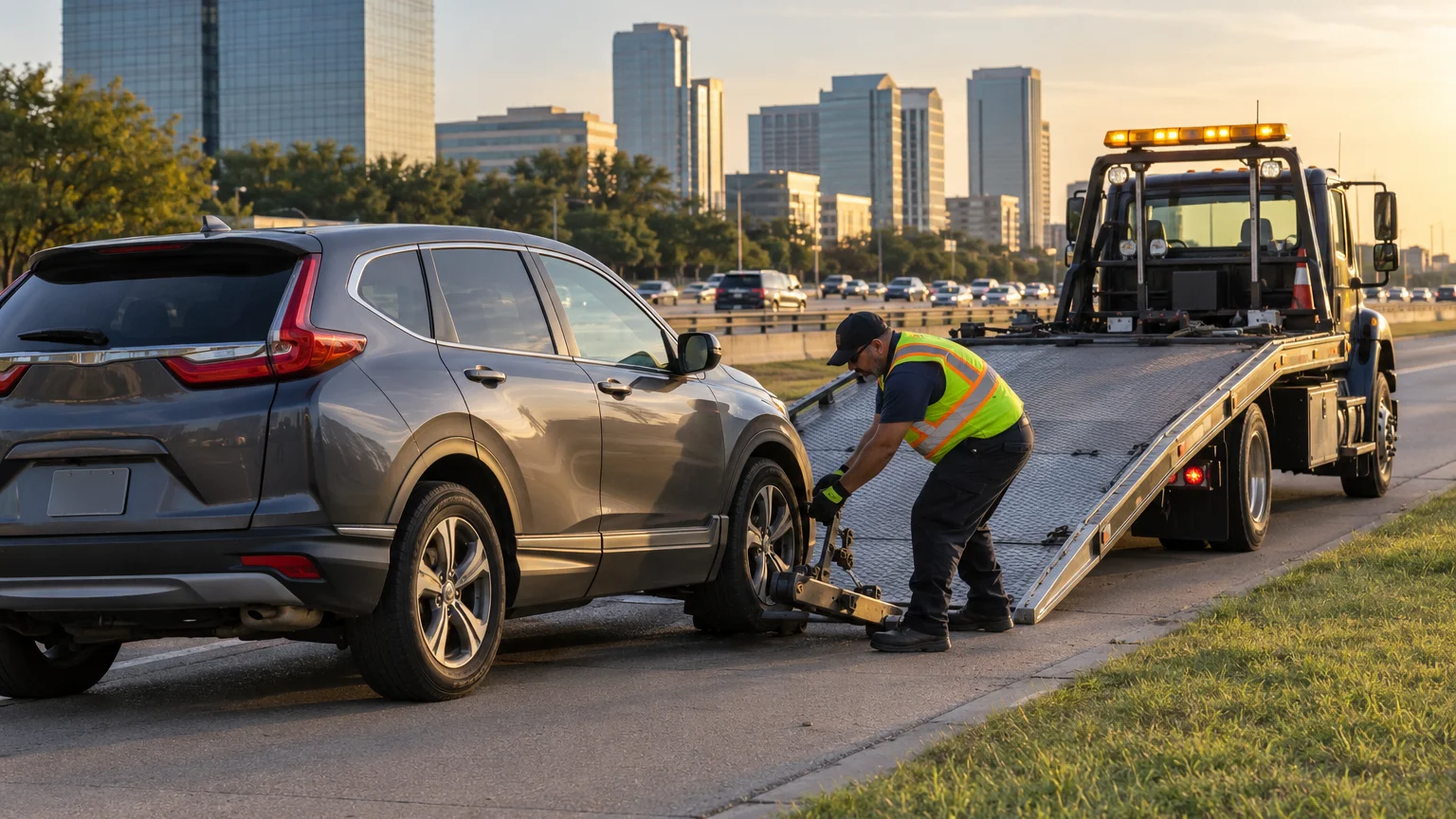
Plano is Collin County, not Dallas County: why that matters
Plano belongs to Collin County, not Dallas County. That distinction matters when you request a tow, search for an impounded car, or question a non-consent charge.
Dallas City Code 48A-43 sets certain non-consent tow limits inside Dallas. Those Dallas limits shouldn’t be presented as Plano law. We couldn’t confirm a separate Plano fee schedule from the approved information available for this page. Ask the operator which rule controls the tow before pickup. For an impound, confirm charges directly with the vehicle storage facility.
Jurisdiction also changes who may have information about your car. A vehicle removed in Plano won’t automatically appear in Dallas Police tow records. Calling the Dallas Auto Pound first may send you in the wrong direction. Start with the authority responsible for the place where the vehicle was parked or removed.
Give dispatch an exact Plano location. Include the street, property name, nearest entrance, and visible landmarks. If the car vanished from an apartment lot, identify the complex and parking space. If police arranged the tow, ask which storage facility received it.
Texas regulates towing operators and vehicle storage facilities through TDLR. You can review the agency’s consumer towing information and use its license search before handing over your keys.
Drivers closer to Dallas face a different jurisdictional mix. Our guide to finding a tow truck near you in Dallas explains that side of the service area.
US 75, the Bush Turnpike, and the run toward Dallas
Plano towing requests often begin with a route decision. US 75 runs south toward Richardson and Dallas. The President George Bush Turnpike, also called PGBT, carries traffic east and west. The Dallas North Tollway serves the western side of the north Dallas corridor.
Those roads can affect which operator makes sense. The closest truck by straight-line distance may sit on the wrong side of a freeway. A frontage-road entrance, tollway ramp, or divided intersection can change the practical approach.
Tell dispatch which roadway you’re on and your direction of travel. “US 75 in Plano” leaves too much uncertainty. A useful description includes northbound or southbound, main lanes or frontage road, and the nearest exit. Share a map pin if your phone allows it.
Your destination matters too. A short move to a nearby repair shop differs from a tow south toward Dallas. If you’re taking the vehicle beyond Plano, give the full destination before dispatch. The operator needs that information to confirm the route and price.
Don’t stand in a traffic lane to inspect damage. Move away from traffic when you can do so safely. If the vehicle is in an exposed travel lane or the scene involves immediate danger, contact emergency authorities.
For an ordinary disabled vehicle, our emergency towing service connects callers with licensed, insured operators. The operator decides what equipment the vehicle and location require. Ask that operator for an arrival estimate because road access and current availability can change.
Apartments, Legacy offices, and highway shoulders
A Plano apartment lot, an office property near Legacy, and a US 75 shoulder create different towing jobs. Dispatch needs to understand the setting before routing an operator.
At an apartment complex, explain whether you own the vehicle or manage the property. A resident requesting help for a disabled car is arranging a consent tow. A property representative seeking removal of someone else’s car is requesting private-property enforcement. Those aren’t interchangeable.
Office properties can add access questions. Give the garage level, clearance concerns, gate instructions, and the vehicle’s exact position. A car parked nose-in against a wall may need different handling than one sitting in an open surface lot. Don’t guess about garage clearance. Read the posted measurement if one is visible.
On a highway shoulder, location accuracy comes first. Tell dispatch the roadway, travel direction, nearest exit, and whether you’re on the right or left shoulder. Describe any collision damage, locked wheels, missing tire, or steering problem. These details help the operator evaluate equipment needs.
A stalled car on a frontage road is also different from one in the main lanes. Don’t describe both as simply “on US 75.” The operator must know how to reach you without circling the interchange.
Plano’s summer heat, spring hail, and winter ice can affect roadside conditions. They don’t support a promised arrival time. Ask the assigned operator for a current estimate and update dispatch if your location changes.
If the car is in a ditch or against a barrier, say so. That may be a recovery job rather than a standard tow.
Consent roadside tow vs a private-property tow at a Plano complex
A consent tow begins when the vehicle owner or authorized driver requests service. You choose the destination and agree directly with the towing operator. The operator sets the price, not Quick Tow Dallas.
A private-property tow can occur without the vehicle owner’s permission. Texas rules govern towing signs and other parts of that process. Approved statewide requirements say a towing sign must be at least 18 by 24 inches, include the international towing symbol, and display required parking and contact information. Placement requirements also apply.
Our guide to Texas private-property towing signs explains those statewide requirements in more detail. It doesn’t replace advice about a specific dispute.
If your car disappeared from a Plano apartment lot, photograph the entrance signs before leaving when it’s safe. Record where the car was parked and when you last saw it. Ask the property office which towing company and storage facility received the vehicle. Confirm the facility’s current release requirements and accepted payment methods directly.
Statewide TDLR maximums apply to covered non-consent towing and storage situations. For a vehicle weighing 10,000 pounds or less, the listed maximum non-consent tow charge is $272. TDLR also lists a $22.85 daily storage cap for vehicles 25 feet or shorter and a $50 notification cap. The exact charges depend on what legally applies to that tow.
For property owners or managers, our private-property towing service explains the referral process. Authorization, signage, and enforcement details must be handled correctly by the property and licensed operator.
What to confirm with the operator before the truck rolls
Start with the total situation, not just “tow truck near me in Plano.” A clear request helps the operator decide whether to accept the job and what equipment may be needed.
Confirm these points directly:
- Your exact pickup location and travel direction
- The vehicle’s year, make, model, and approximate condition
- Whether any wheel is locked, missing, or badly damaged
- Whether the vehicle sits in a garage, ditch, traffic lane, or tight space
- The complete delivery address
- The quoted price and accepted payment methods
- Any possible mileage, toll, storage, or after-hours charge
- The operator’s towing license information
- Who will meet the driver and provide the keys
The operator sets and quotes the price. Quick Tow Dallas doesn’t publish a Plano hookup rate or per-mile rate. We also couldn’t confirm a Plano-specific government fee schedule from the approved source material. Ask what the quote includes before dispatch and confirm any possible changes directly with the operator.
A 200-mile tow can’t be priced responsibly without operator details. Vehicle size, pickup conditions, destination, equipment, and current terms can all matter. Get a direct quote for the exact trip.
If money is tight, say so before the truck rolls. Check whether your insurer, vehicle warranty, membership program, or credit card offers roadside benefits. Coverage isn’t guaranteed, so contact the provider and confirm your own plan. Ask the operator which payment methods are accepted and what happens if you can’t approve the quoted amount.
For an impounded vehicle, speak with the storage facility. Ask for an itemized explanation of the charges and the documents required for release.
How this Dallas dispatch site connects Plano callers to local pros
Quick Tow Dallas is a dispatch and referral service. We don’t own trucks, employ tow drivers, operate a Plano yard, or hold a towing license. We connect Plano callers with licensed, insured towing operators who can evaluate the requested work.
When you contact us, we collect the details an operator needs. That includes the pickup point, vehicle type, problem, access conditions, and destination. We then route the request to an operator serving the area. You contract directly with that operator.
The operator confirms availability, equipment, price, and an arrival estimate. We don’t control road congestion, active calls, weather, or where an available truck begins its trip. That’s why we don’t promise a response window.
This referral model also means you should verify the operator. Check the company or individual through the TDLR license search. Confirm the business name on the truck matches the operator you expected. Review the destination before the vehicle leaves.
Plano isn’t simply an extension of downtown Dallas dispatch. A request near US 75 may route differently from one near PGBT or the Dallas North Tollway. A private garage also requires different information than an open shoulder. Clear details help avoid sending an operator who can’t access or safely handle the vehicle.
If the vehicle was towed without your consent, don’t assume our dispatch network has it. Contact the property, responsible authority, or identified storage facility first. A referral service can’t release an impounded vehicle or change government-regulated charges.
When to call us
Call when a disabled vehicle, collision scene, private property, or difficult pickup requires a licensed towing professional. Have your Plano location, vehicle details, destination, and access notes ready. Call us at (469) 902-4411 and we’ll connect you with an operator who handles this work.