A disabled vehicle can look simple until loading begins. For flatbed towing in McKinney, clear vehicle and access details help the operator assess the pickup before dispatch.
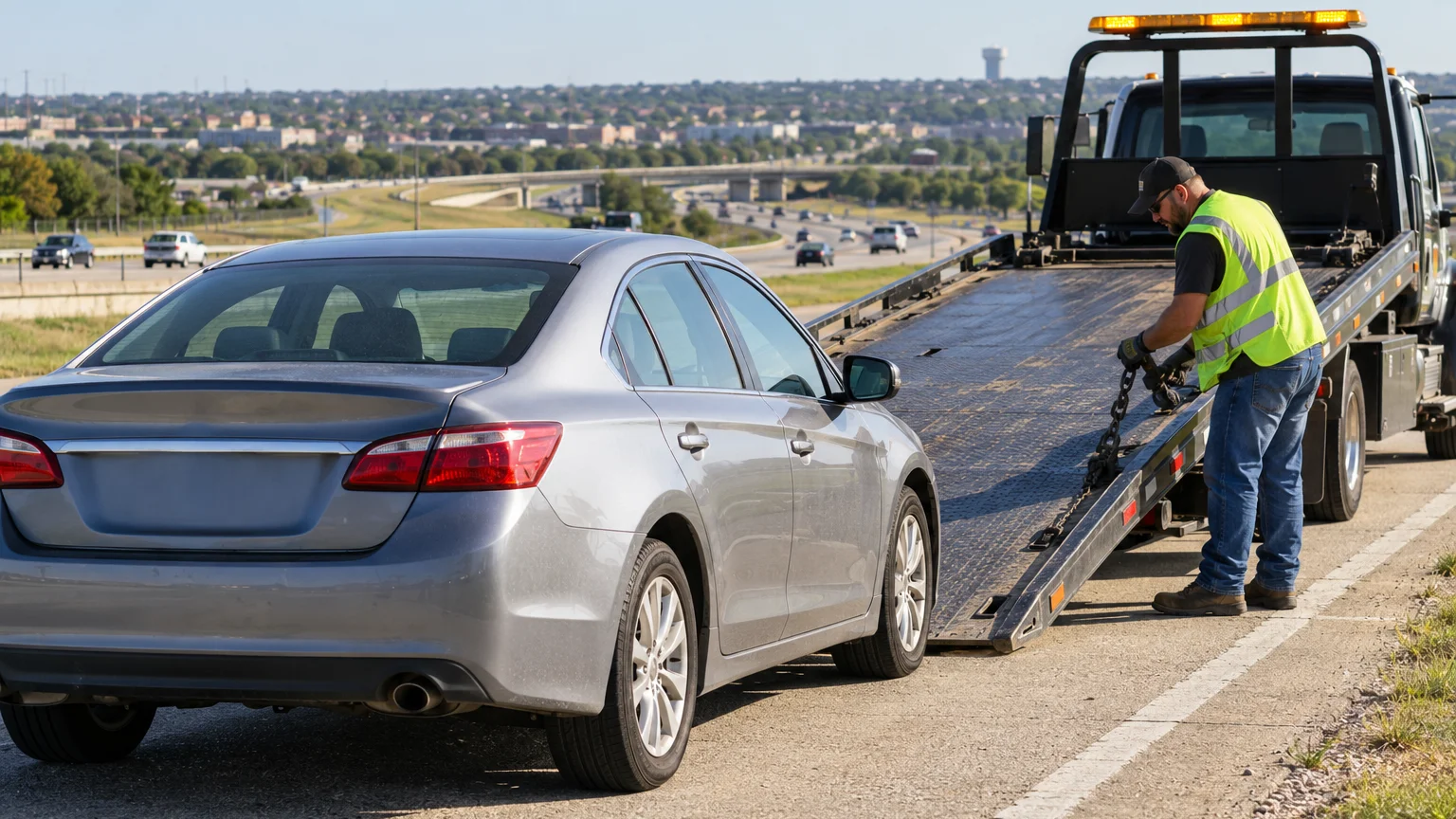
Quick Tow Dallas connects callers with licensed, insured towing operators. We don’t own flatbeds or perform the tow. The operator assesses the vehicle, confirms suitable equipment, and sets the price.
Describe the vehicle and why it can’t move
Start with the vehicle’s year, make, model, and body style. A sedan, crossover, pickup, and cargo van can present different loading needs. If you’re unsure about the trim, share what appears on the registration or vehicle badge.
Tell the dispatcher whether the vehicle has factory equipment or modifications. Mention lowered suspension, aftermarket wheels, body kits, running boards, or other visible changes. Don’t estimate measurements you haven’t checked. A photo can often explain the condition better than a guess.
Next, describe why the vehicle can’t move. The operator needs more than “it broke down.” Explain what happened immediately before it stopped. Mention whether the engine starts, the transmission selects a gear, or the vehicle can move under its own power.
Report visible damage without diagnosing it. A wheel pointing at an unusual angle matters. So does leaking fluid, damaged bodywork, or loose material beneath the vehicle. After a collision, describe which end or side took the impact.
Tell the dispatcher if warning lights appeared or the vehicle lost power. You don’t need to identify the failed part. The operator needs the condition, not a roadside mechanical theory.
Not every disabled vehicle requires a flatbed. The operator may recommend another towing method after reviewing the details. Our flatbed towing service page explains how we route these requests to operators in the network.
If you’re comparing towing methods, read our guide on when to request a flatbed tow truck. The final equipment decision still belongs to the operator handling the job.
Share wheel, steering, and clearance details
Wheel condition can change how an operator approaches the pickup. Tell the dispatcher whether every wheel remains attached and appears straight. Mention a flat tire, broken wheel, damaged axle area, or wheel trapped against bodywork.
The operator also needs to know whether the wheels roll. Don’t force the vehicle to test this. Report only what you already know from the breakdown or collision.
Explain whether the steering wheel turns and whether the front wheels respond. If the steering is locked, say so. If you can’t access the cabin, share that detail too. Lost keys, a damaged ignition, or a locked vehicle can affect the operator’s assessment.
Tell the dispatcher whether the transmission can enter neutral. Don’t crawl beneath the vehicle or attempt an unfamiliar release procedure. The operator can decide how the condition affects loading.
Ground clearance matters as well. Mention a low front bumper, lowered suspension, damaged underbody panel, or part hanging near the pavement. Describe any curb, parking stop, median edge, or uneven surface close to the vehicle.
Electric vehicles and all-wheel-drive vehicles may have manufacturer-specific transport requirements. Share the exact model and drivetrain if known. Don’t assume a flatbed is automatically required. Let the operator review the vehicle and its condition.
Photos are useful when they show the full vehicle and affected wheels. Include the space around the car when possible. Avoid sending only a close-up that hides the pickup area.
These details help the operator evaluate the job before committing equipment. They don’t replace an on-site assessment. If the situation follows a collision or leaves the vehicle exposed near traffic, ask about emergency towing dispatch and follow directions from the operator or public authorities.
Explain pickup and destination access
A flatbed tow involves two locations. Describe both the pickup point and the destination before dispatch. A complete address is helpful, but access details matter just as much.
For the pickup, say whether the vehicle is on a highway shoulder, access road, driveway, commercial parking area, or inside a parking structure. Name the nearest entrance or recognizable business when that information is available.
Commercial parking areas across McKinney can vary widely. One vehicle may sit in an open surface lot. Another may be behind a gate, beside a loading area, or between closely parked cars. Tell the dispatcher what surrounds the vehicle.
Mention gates, access codes, property restrictions, or attendants. If someone else controls entry, confirm how the operator will gain access. Don’t assume a truck can enter because passenger vehicles can.
Parking structures need careful description. Share whether the vehicle is inside, near an entrance, or on another level. Mention posted clearance information only if you can read it directly. Don’t guess at height or available turning room.
Describe the destination with the same care. Tell the operator whether it’s a repair shop, residence, dealership, or another approved location. Confirm that the destination expects the vehicle and can accept it when the operator arrives.
If the destination is outside McKinney, provide the full city and address. Distance affects dispatch planning and the operator’s price. Our guide to long-distance towing from McKinney covers the information needed for a longer route.
The operator sets the price, not Quick Tow Dallas. Ask the operator to confirm the destination and price before the truck rolls. Also ask what could change the price if the access or vehicle condition differs from your description.
US 75 shoulders differ from local parking areas
A disabled vehicle along US 75 presents a different pickup setting than a car in a McKinney parking lot. Moving traffic, shoulder position, and limited working space can affect the operator’s assessment.
Give the dispatcher your direction of travel. Share the nearest exit, cross street, or visible location marker you can confirm. A business address miles away from the vehicle may send the operator toward the wrong access point.
Say whether the vehicle is fully on the shoulder or partly in a travel area. Describe its orientation and which side faces traffic. Don’t estimate distances. Plain descriptions are more useful than uncertain measurements.
If the vehicle is near SH 121, specify whether you’re on the main roadway, a ramp, an access road, or in a nearby commercial lot. These aren’t interchangeable pickup points. The operator needs the actual vehicle location, not only the nearest highway name.
A local parking-area pickup usually requires different information. The operator may need a store name, entrance, row, or nearby landmark. Mention parked vehicles, curbs, gates, and narrow approaches around the disabled car.
Don’t move a damaged vehicle merely to simplify the description. Don’t attempt to direct traffic or perform loading steps yourself. Follow instructions from law enforcement, roadway personnel, or the dispatched operator.
Quick Tow Dallas can relay the location details you provide. We can’t promise an arrival time because operator availability and pickup conditions vary. Ask the assigned operator for a current arrival estimate.
Texas regulates towing operators through the Texas Department of Licensing and Regulation. You can review TDLR towing consumer information before service. That resource also helps distinguish regulated towing work from unrelated roadside services.
Let the operator confirm suitable equipment
Requesting a flatbed starts the conversation. It doesn’t settle the equipment decision. The towing operator needs to consider the vehicle, damage, wheel condition, access, and destination.
Avoid telling the dispatcher that any truck will work. A pickup that looks open in one photo may have an unseen curb, slope, gate, or damaged wheel. Share the facts and let the operator assess them.
Before dispatch, review the main details together:
- The vehicle’s year, make, model, and body style
- Why it can’t move
- Visible wheel, steering, or body damage
- Whether the keys are available
- Whether the vehicle can enter neutral, if already known
- The exact pickup position
- Nearby access limits or obstructions
- The full destination
- Any photos that show the vehicle and surrounding space
Ask the operator to confirm the proposed equipment and price. If anything changes before arrival, update the operator. A vehicle moved to another lot or a newly locked gate can change the pickup conditions.
You can verify a towing operator through the TDLR license search before handing over the keys. Quick Tow Dallas is a referral and dispatch service. The customer contracts directly with the operator performing the work.
Keep the operator’s contact details available during the pickup. Confirm where the vehicle is going and who can receive it. Remove personal items only when access is available and doing so doesn’t conflict with instructions at the scene.
Clear information helps everyone avoid preventable confusion. It also lets the operator identify questions before arriving. That’s especially useful when the vehicle is damaged, inaccessible, or headed beyond McKinney.
When to call us
Call when a disabled or damaged vehicle needs assessment by a licensed towing operator. Share the vehicle, wheel, access, and destination details so the operator can evaluate the pickup.
Call us at (469) 902-4411 and we’ll connect you with an operator who handles this work.