A long tow from McKinney starts with two exact locations, not just city names. Dispatch also needs the vehicle’s condition, access details, and a destination contact. Those facts help us connect you with an operator who can evaluate the trip.
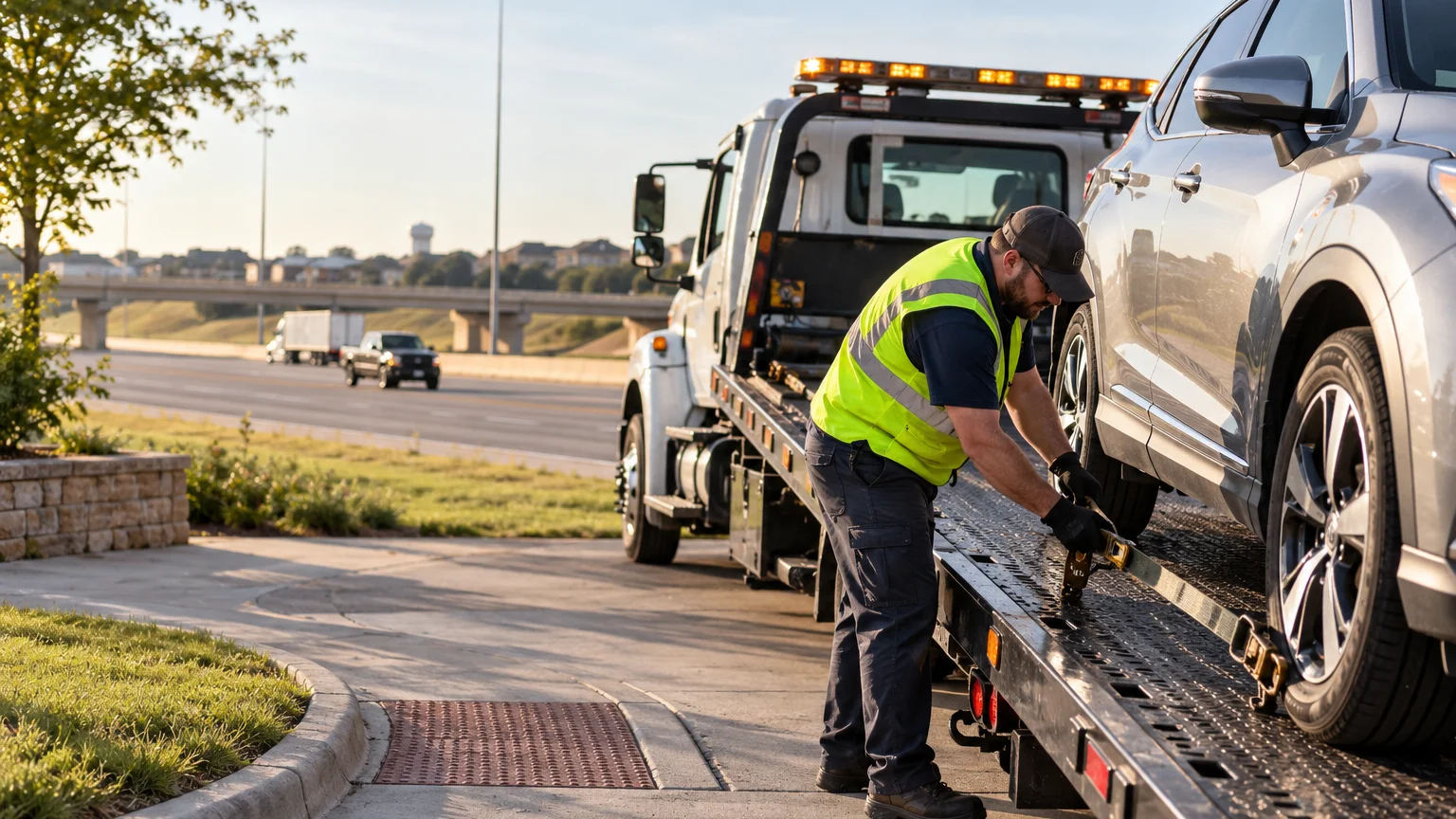
Give dispatch both exact locations before the call is matched
Start with the precise pickup point and final destination. “McKinney to Dallas” doesn’t give an operator enough information to assess the run. A street address, business name, parking area, or marked highway location is much more useful.
For a US 75 pickup, explain which direction the vehicle was traveling. Include the nearest exit or cross street if you know it. Say whether the vehicle is on the main lanes, a frontage road, an entrance ramp, or nearby private property. These details can affect how the operator approaches the vehicle.
The destination needs the same level of detail. Give the full address and the name of the repair shop, residence, dealership, storage site, or other receiving location. If the destination is outside McKinney, identify the correct city and ZIP code. Similar street names can appear across Collin County and the Dallas area.
Tell dispatch if the destination could change. An undecided endpoint makes it harder for an operator to evaluate the trip and set a price. If you’re comparing repair shops, choose one before asking the truck to roll.
Quick Tow Dallas doesn’t transport the vehicle itself. We route the request to a licensed, insured operator. You’ll contract directly with that operator for the work. Our long-distance towing service page explains the referral process.
Keep both addresses available during the call. If either location lacks a street address, share the clearest nearby landmark and map pin you have. The operator can then decide whether the location information is sufficient.
Share the vehicle condition and destination access
A tow truck McKinney request needs more than the vehicle’s make and model. Tell dispatch whether the vehicle starts, rolls, steers, and shifts into neutral. Report flat tires, locked wheels, steering damage, collision damage, or loose exterior parts. Don’t describe a damaged vehicle as simply “not running.”
Say where the keys are and who has them. If nobody will meet the operator at the pickup, explain that before dispatch. The operator must decide what authorization and access are needed for that specific job.
Access matters at both ends. Describe parking garages, gates, narrow driveways, low branches, tight parking rows, and controlled entrances. If the vehicle sits behind another car, tell dispatch. If a property manager, security desk, or gate attendant controls entry, identify that issue early.
Don’t choose equipment based only on a guess. Give the operator the vehicle facts and let that operator confirm the suitable towing method. You can ask about flatbed towing when the vehicle has damage, clearance concerns, or another condition that may affect loading. The operator will make the capability decision.
Remove personal items you’ll need before pickup when you have lawful access to the vehicle. Also tell the operator about modifications that could affect loading, such as unusually low bodywork or altered wheels. Don’t assume a standard setup fits every car.
Good intake details prevent a mismatch between the request and the operator’s equipment. They also help the operator evaluate the pickup and destination before accepting the trip.
US 75 pickup details can change operator access
US 75 runs through McKinney and continues south toward Plano and Richardson. A vehicle near that corridor may be on the main highway, a ramp, a frontage road, or a nearby lot. Each description points the operator toward a different access route.
Don’t rely only on the last business you passed. Share the direction of travel and the nearest exit information visible to you. A map pin can help, but add a plain description. Location services sometimes place a pin beside the roadway instead of on the correct travel lanes.
Tell dispatch if police, property staff, or another towing company is already present. Don’t imply that Quick Tow Dallas participates in a police rotation. We’re a dispatch and referral service for drivers seeking an operator.
Your destination may take the operator south on US 75 toward Plano, then toward another Dallas-area corridor. It may instead stay within McKinney or continue beyond Collin County. Those are different trips, even when they begin near the same exit. Our guide to Plano and North Dallas dispatch offers more context for pickups farther south.
Road conditions and access can change while a request is being matched. Don’t move the vehicle or change the pickup point without updating dispatch and the operator. If authorities direct a relocation, give the operator the new location.
For an out of town towing McKinney request, accuracy matters more than shorthand. “Near 75” is a starting point. Direction, exit, roadway position, and a confirmed pin create a usable pickup description.
Confirm who can receive the vehicle at the destination
A long-distance tow can’t end with an uncertain handoff. Confirm that the destination accepts the vehicle and identify the person authorized to receive it. Give the operator the business name and destination contact before the trip begins.
If the destination is a repair shop, ask the shop where the vehicle should be left. Confirm whether someone must be present. Don’t assume an open parking area means the shop has agreed to accept the car.
For a residence, explain the available parking location. Mention gates, steep driveways, tight turns, street restrictions, or other access concerns. The operator decides whether the planned drop point is workable.
If the destination is a dealership, storage property, or secured facility, ask what entry instructions apply. Quick Tow Dallas doesn’t operate a yard or receive vehicles. The operator also shouldn’t be expected to choose a new destination after reaching a closed or inaccessible property.
Write down the receiving contact’s name and share it with the operator. Make sure that person knows which vehicle is coming. Include the year, make, model, color, and plate information when available. Those details can help the destination identify the correct vehicle without relying on a vague description.
If nobody can receive the vehicle, discuss that with the operator before accepting the trip. The operator must agree to the handoff arrangement. Don’t leave that decision until arrival.
A confirmed destination protects the purpose of the tow. It reduces the risk of sending the vehicle to a gate, lot, or business that won’t accept it.
What the operator confirms before accepting the trip
The operator should confirm the pickup, destination, vehicle condition, access, and required equipment. The operator also sets the price. Ask for that price before the truck rolls, and confirm what information it was based on.
Long-distance pricing can depend on the actual trip and vehicle details. Quick Tow Dallas doesn’t set the operator’s charge. We also don’t promise a flat rate, a particular price structure, or a specific arrival window. Our article about long-distance tow cost in Dallas explains which details to gather when discussing price.
Ask whether the operator can complete the entire requested trip. If another company or transfer would be involved, the operator should explain that arrangement before you agree. Don’t assume every local pickup operator accepts every distant destination.
Texas regulates towing through the Texas Department of Licensing and Regulation. You can check a company or operator through the TDLR license search. TDLR also publishes consumer information about towing. Quick Tow Dallas doesn’t hold a towing license because it doesn’t perform the tow.
Before accepting, repeat the addresses and vehicle description. Confirm the destination contact and any gate instructions. Ask the operator for an arrival estimate, since current availability and location affect that answer.
Keep the operator’s contact information available during the trip. If the receiving location changes its instructions, contact the operator directly. A clear agreement before pickup gives both sides the same plan.
When to call us
Call when a vehicle in McKinney needs a licensed towing operator for an out-of-town destination. Have both locations, the vehicle condition, access details, and destination contact ready. Call us at (469) 902-4411 and we’ll connect you with an operator who handles this work.